
 EN
EN
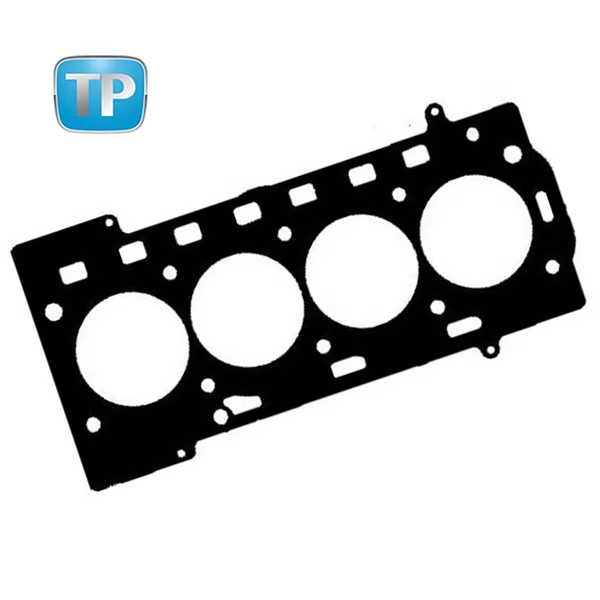
MLS Head Gaskets: Precision Sealing for High-Boost and High-RPM Engines
Multi-layer steel construction and elastic recovery under thermal cycling
Multi layer steel head gaskets are made from several layers of stainless steel with special rubber coatings that help keep everything sealed even when things get really hot. What makes them work so well is their ability to bounce back after going through those temperature swings that happen in engines running at high boost levels or just spinning really fast for long periods. These multiple layers actually take care of the natural bending that happens in engine heads, which stops compression leaks and holds up against the massive pressure inside the combustion chamber, sometimes over 2500 pounds per square inch. Most major engine builders want to see surface finishes around 50 Ra or better on both the cylinder head and engine block where the gasket sits. Getting the installation right matters too. Following the correct tightening sequence is essential, and many pros will check this with stretch gauges to make sure no part gets too much stress that could ruin the gasket's performance down the road.
Raised sealing beads and combustion chamber armor for cylinder integrity
The concentric raised beads found around cylinder bores actually form those tiny micro-sealing areas that really crank up surface pressure somewhere around 3 times what flat gaskets can manage. These armor rings basically keep all that combustion force locked inside where it belongs, stopping flames from spreading out and warping the bore walls even when engines are running way over 100 psi boost levels. According to some serious finite element analysis work, these little bumps cut down thermal stress on nearby head bolts by about 18 percent, which means better clamp hold over time. Most seasoned mechanics will tell anyone who'll listen not to mix MLS designs with those extra o-rings because if the grooves aren't perfectly aligned, guess what happens? Leaks start forming right there. For turbocharged or supercharged setups specifically, this built-in reinforcement makes all the difference. Cylinder sealing stays solid through hundreds upon hundreds of thermal cycles during actual dyno tests, proving its worth beyond just theory.
Copper Head Gaskets: Maximum Strength for Extreme-Horsepower Applications
Tensile strength and creep resistance at sustained high combustion temperatures
Copper holds up really well when things get super hot, which is why it's so good for engines that push past 1,500 horsepower marks. The metal has this impressive tensile strength rating of around 210 MPa even at 500 degrees Celsius, meaning it can handle those sudden pressure surges inside cylinders without giving way. Plus, copper just doesn't deform as much over time when exposed to constant high temperatures because of its natural resistance to creeping deformation. Composite gaskets tend to break down when exposed to combustion acids, but copper stands firm against these harsh chemicals, making it ideal for racing engines that burn methanol or nitromethane blends. When engineers run thermal cycling tests, they find copper head gaskets maintain their shape much better than polymer coated ones too. After sitting through 200 hours at scorching 1,000 degrees Celsius, copper gaskets show only about 32% thickness variation compared to their plastic counterparts, which means they seal properly longer between engine rebuilds.
O-ring and wire ring reinforcement to mitigate bore distortion
Receiver grooves that are precisely machined work together with stainless steel wire rings to reduce cylinder bore flex when things get really intense in high stress situations. When tightened down during the torque process, the wire sticks out about a quarter of its own diameter and gets compressed into a receiver groove that's actually 150% wider than the wire itself. This creates pressure around the sides that helps fight off those powerful combustion forces. For this reinforcement system to work properly, the surfaces need to be super smooth (Ra has to be below 10 microinches) and there needs to be checks after machining to make sure no coolant or oil is leaking through. Copper does have one downside though when it comes to sealing fluids. That's why many drag engines skip having coolant passages altogether, since copper is just so good at keeping gases sealed in where they belong.
Head Gasket Durability Comparison: Real-World Performance Data
500-hour dyno test results: MLS vs. copper sealing longevity across 30–1,500 HP
After running head gasket materials through 500 hours on the dyno, we start seeing where they really show their limits. For engines under 500 horsepower, both MLS and copper gaskets hold up pretty well, with almost all surviving the tests at around 98%. When things get serious between 500 to 1,000 HP though, MLS starts pulling ahead明らかに. These multi-layer steel gaskets kept working properly in 89% of cases, whereas copper ones started giving up the ghost much faster at just 72%, mainly because the heat makes them soften up (as noted in SAE Materials Journal last year). Past the 1,000 HP mark is where everything gets interesting. MLS manages to stay intact in about 76% of situations thanks to how it springs back after stress, but copper simply can't handle it anymore. Most copper samples failed completely within only 320 hours of testing, with failures happening in 83% of those trials. Looking at these numbers makes it clear why most shops recommend MLS when dealing with big power builds that see temperature swings over 200 degrees Celsius difference during operation.
Failure mode analysis in turbocharged LS and RB26 engines (SAE & Cometic benchmarks)
Looking at 120 turbocharged engines that have failed reveals some interesting weaknesses specific to different materials. Copper head gaskets tend to fail mainly because of compressive set issues, which accounts for about two thirds of all copper failures. We also see fire ring erosion problems in LS engines when they're making over 800 horsepower. For MLS gaskets, things look different. Most failures happen due to micro fretting wear, around 41 percent of the time, plus there's combustion gas leakage issues particularly common in RB26 setups. What really matters though is how smooth those surfaces are. Engines where the Ra value stays under 20 micro inches last roughly 37 percent longer no matter what kind of material was used. And let's not forget about deck flatness either. Keeping that within 0.003 inch variation makes a big difference. When combined with proper torque sequencing, these factors explain about half of why some head gaskets last much longer than others in tough operating conditions.
Critical Installation Factors That Determine Head Gasket Longevity
Surface finish, torque retention, and head/block material compatibility
Getting the surfaces just right is absolutely essential if we want our head gaskets to last. Most engine builders aim for around 30 to 60 Ra finish on both the block and cylinder head where they meet. Too rough creates hot spots that can ruin everything, but if it's too smooth, the gasket won't grip properly either. Don't forget about torque retention either. Stick strictly to the manufacturer's sequence when tightening down those bolts, especially with modern torque-to-yield fasteners. A good quality torque angle gauge makes all the difference here. Aluminum heads expand way faster than iron blocks when things heat up, so we need special gaskets designed to handle this expansion difference. Mixing different metals leads to corrosion problems, something that gets really bad in methanol engines because of pH issues. Before installing anything, double check those liner protrusion specs. Even tiny differences between 0.003 and 0.006 inches will lead to early failures in about four out of five diesel setups according to some recent research. Remember these basics surface prep, consistent clamping force, and matching expansion rates these are what separates successful builds from catastrophic failures under pressure.
FAQ
What are MLS head gaskets made of?
MLS head gaskets are made from several layers of stainless steel and are coated with special rubber to ensure effective sealing even at high temperatures.
What are the benefits of copper head gaskets?
Copper head gaskets exhibit high tensile strength and creep resistance, making them suitable for engines that exceed 1,500 horsepower and are exposed to extreme combustion temperatures.
How does surface finish affect head gasket longevity?
A proper surface finish helps the gasket grip effectively. Engine builders typically aim for a surface finish between 30 to 60 Ra to balance grip and avoid hot spots.
Why do copper head gaskets fail in high-stress engines?
Copper head gaskets tend to fail due to compressive set issues and softening under high heat, leading to greater failure rates compared to MLS gaskets in high-stress environments.