
 EN
EN
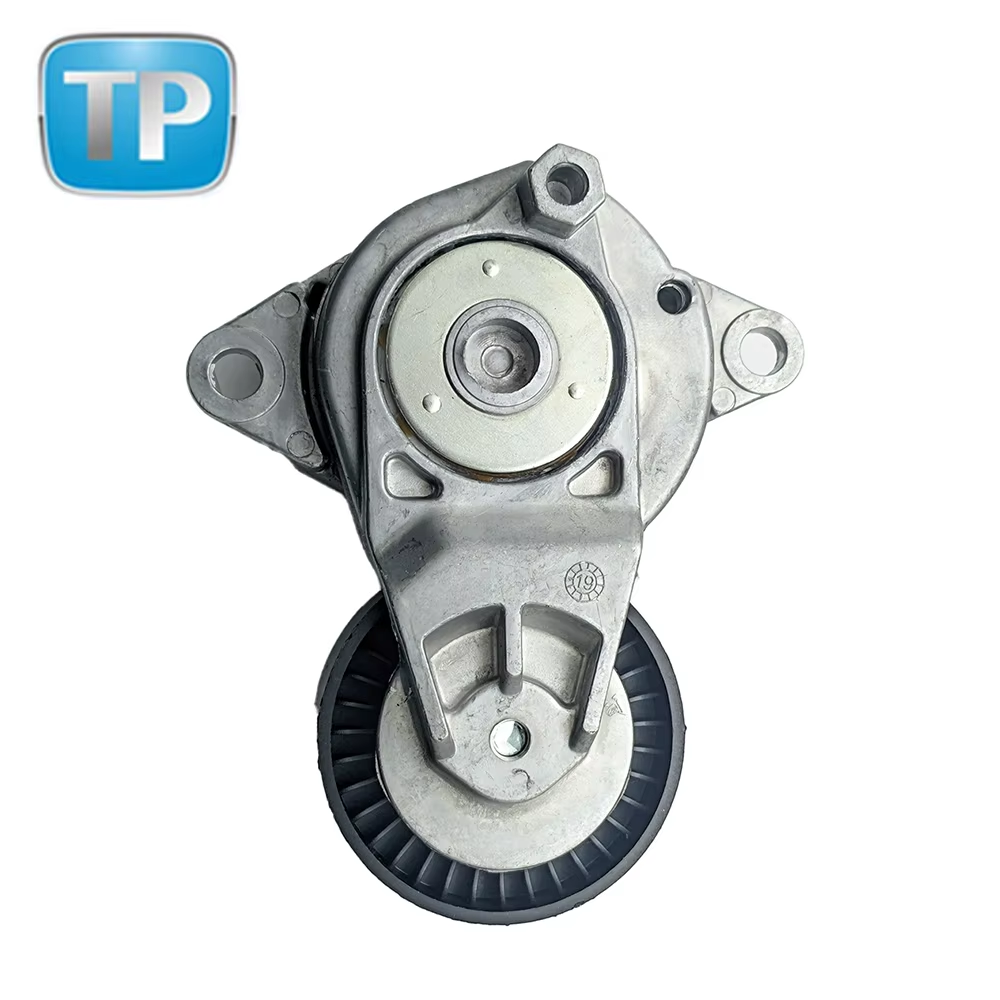
Understanding Belt Tensioner Types and Their Engine-Specific Functions
Manual tensioners: simplicity and serviceability for legacy inline-4 and pushrod V6 engines
Manual belt tensioners rely on bolts to adjust pulley positions when installed, and they need regular tightening as the belts naturally stretch over time, usually somewhere around 30 to 50 thousand miles driven. These tensioners have few moving components and are pretty transparent mechanically, which makes them easy to work on for older engine setups such as inline fours or pushrod V6s. Mechanics appreciate this because getting into these engines isn't so complicated, and figuring out what's wrong takes less time than dealing with computer controlled systems. The simple design continues to be used in many classic cars that don't come equipped with modern electronics for engine management.
Spring-loaded tensioners: dynamic load compensation in modern turbocharged and direct-injection 4- and 6-cylinder engines
The spring loaded tensioners work by compensating automatically when belts stretch or when there are sudden changes in load. They do this through those calibrated coil springs that keep pressure steady throughout all RPM ranges. These components become really important in modern engines like turbocharged models and direct injection four and six cylinder variants. We see torque spikes happen during boost periods that can swing around 40% sometimes. That's why these tensioners matter so much. When driving under heavy loads, the system responds instantly to prevent any belt slippage. This becomes especially crucial for vehicles equipped with stop start technology since those accessory belts get cycled hundreds of times daily according to SAE J2982 testing standards. Compared to older manual versions, these automatic systems save time on regular adjustments and just keep working reliably no matter what kind of driving conditions come along.
Hydraulic tensioners: maintaining precise belt tension under high-RPM and variable-valve-timing (VVT) conditions
Hydraulic tensioners work with piston dampers filled with special fluids that stay stable even when temperatures change. These components help soak up those annoying torsional vibrations while keeping tension accurate down to the micron level something really important for engines spinning over 7,000 RPM or ones with variable valve timing systems. When it comes to damping, the fluid does a great job suppressing harmonic resonance which would otherwise mess up the timing on cam phasers. Original equipment manufacturers have actually tested this stuff and found around 60 percent fewer timing issues compared to older spring based systems when engines hit speeds above 6,500 RPM. Getting that kind of precision where tension stays within plus or minus 2 percent makes all the difference in performance focused powertrains. That's why we see so many factories installing hydraulic tensioners as standard equipment in their high output V6 and V8 engine models these days.
Key Compatibility Requirements by Engine Architecture
Mounting geometry, pivot axis alignment, and arm travel for transverse FWD 4-cylinders vs. longitudinal V8s
The way engines are built sets pretty strict rules for how belt tensioners need to fit together mechanically, especially when it comes to where they mount, how their pivot points align, and just how far those tensioner arms can move. Take those little four cylinder engines in front wheel drive cars - they're packed into tight spaces so manufacturers have to design smaller tensioners with shorter arm movement (around 15 to 20 mm) and angled pivots that won't interfere with radiator fans or other components. These compact systems actually face some serious sideways forces when the car turns corners, which is why mechanics often see reinforced bushings and lighter aluminum arms being used to cut down on inertia during stop and go driving. Longitudinal V8 engines tell a different story altogether. These big powerhouses need tensioners that can handle vibrations from all that torque, so they typically require longer arm travel (about 25 to 35 mm) with pivot points that line up straight with the crankshaft's rotation. A study by SAE International showed that even a small misalignment over 3 degrees in V8 applications can make bushings wear out 40% faster, while similar issues in transverse setups usually tolerate around 5 degrees before becoming problematic. When choosing materials, engineers go with aluminum arms for lighter duty applications but switch to cast iron bases for V8s since they get blasted with exhaust heat sometimes reaching over 300 degrees Fahrenheit. And remember what every mechanic knows: always stick to the factory specs for tightening those pivot bolts. Going too tight on aluminum blocks is a common mistake that leads to stripped threads and early tensioner failures.
Material Selection and Environmental Durability for Long-Term Belt Tensioner Reliability
Corrosion-resistant coatings (zinc-nickel, polymer) for stop-start hybrids and high-humidity operating environments
The quality of materials plays a big role in how reliable tensioners stay over time, particularly when dealing with those stop-start hybrid systems we see so much these days plus all the moisture problems in humid environments. Stop-start technology puts alternator belts through roughly 30% more load cycles compared to regular engines according to SAE research from last year (Paper 2023-01-0721). This extra work wears down the pivots and bushings faster than normal. Zinc-nickel electroplating stands out for fighting off corrosion from road salt, sea air near coastlines, and the constant temperature changes vehicles experience daily. What makes it special? It keeps its shape even after countless hot and cold cycles. Polymer coatings work hand in hand with this protection. They cut down friction where parts move against each other, create necessary electrical barriers around high voltage areas in hybrids, and hold up against oil breakdown when engine compartments get really hot, sometimes exceeding 150 degrees Celsius. For cars operating in tropical climates or along seashores, using two layers of coating becomes essential to stop metal parts from corroding against one another. When manufacturers pick the right materials for these applications, they actually cut early tensioner failures by nearly half according to ACES data from their Bulletin No. 23-08. This means belts stay properly tensioned for much longer during a vehicle's entire lifespan on the road.
OEM vs. Aftermarket Belt Tensioners: Matching Performance to Emission Standards and Powertrain Generation
The choice between OEM and aftermarket belt tensioners makes a big difference when it comes to meeting emissions requirements, keeping accessories running efficiently, and ensuring the powertrain lasts over time. These days, engines especially ones equipped with stop-start features or variable valve timing need tensioners capable of maintaining proper belt load even when conditions change suddenly. Original equipment manufacturers test their units on complete engine dynamometers to guarantee accurate tensioning during cold starts and other critical moments where emissions matter most. When looking at aftermarket products, there's quite a range out there. High quality aftermarket tensioners actually do meet ISO/TS 16949 standards and work well with turbocharged systems. But many cheaper alternatives simply don't have the necessary thermal stability or hysteresis control required for modern engines like Euro 6 or EPA Tier 4 models. Mechanics who've worked on these newer engines know firsthand how important this specification really is.
For powertrain generation compatibility, key distinctions include:
| Criterion | OEM Tensioners | Aftermarket Tensioners |
|---|---|---|
| Emission System Support | Engineered for original SCR/EGR calibration | Requires verification against test cycles |
| Hybrid Powertrain Fitment | Guaranteed compatibility with regenerative braking loads | Limited validation data for electric accessory drives |
The OEM tensioners help stop belt slippage which can actually cut down on alternator output by around 15%. That kind of drop matters quite a bit for those sensitive NOx sensors and particulate filters that rely on stable voltage levels. For folks working on older engines, there are good quality aftermarket replacements available these days. The ones with polymer coated bearings have shown their worth over time. Still, it's best not to go with uncertified products when dealing with high RPM VVT systems. Materials just don't hold up the same way in these applications. We've seen cases where inferior components simply couldn't handle the stress, leading to complete timing failures that cost thousands to fix.
FAQs
What are the main types of belt tensioners?
The main types of belt tensioners are manual, spring-loaded, and hydraulic. Each serves specific functions depending on the engine type and driving conditions.
Why are hydraulic tensioners preferred for high-performance engines?
Hydraulic tensioners provide precise belt tension and absorb vibrations, which are crucial for high-performance engines with high RPMs and variable valve timing systems.
How do environmental factors affect belt tensioner reliability?
Environmental factors like humidity and temperature changes can cause corrosion and wear out components faster. Using corrosion-resistant coatings such as zinc-nickel and polymer can improve longevity.
How do OEM tensioners differ from aftermarket ones?
OEM tensioners are tested to meet specific emission standards and powertrain requirements, while aftermarket tensioners vary in quality and may not always meet the same specifications.
Table of Contents
-
Understanding Belt Tensioner Types and Their Engine-Specific Functions
- Manual tensioners: simplicity and serviceability for legacy inline-4 and pushrod V6 engines
- Spring-loaded tensioners: dynamic load compensation in modern turbocharged and direct-injection 4- and 6-cylinder engines
- Hydraulic tensioners: maintaining precise belt tension under high-RPM and variable-valve-timing (VVT) conditions
- Key Compatibility Requirements by Engine Architecture
- Material Selection and Environmental Durability for Long-Term Belt Tensioner Reliability
- OEM vs. Aftermarket Belt Tensioners: Matching Performance to Emission Standards and Powertrain Generation
- FAQs