
 EN
EN
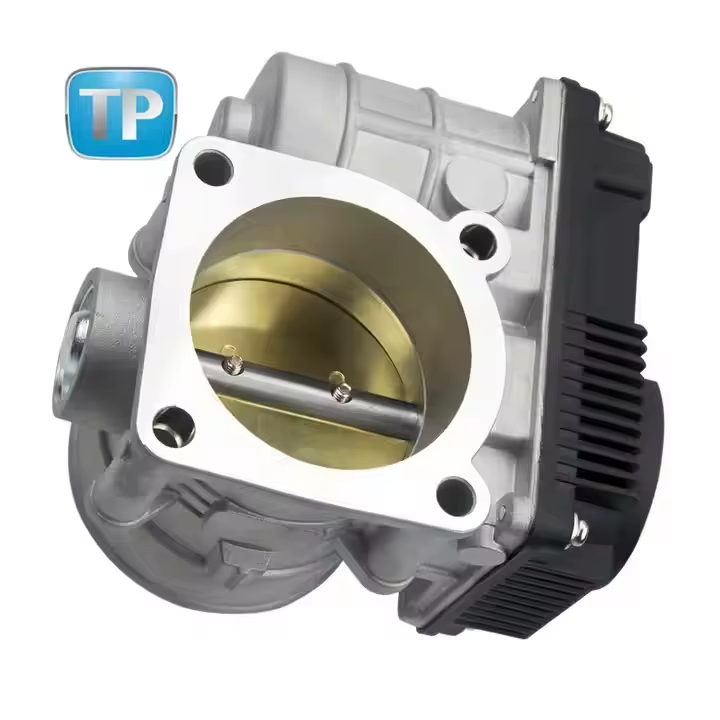
Why Throttle Body Maintenance Directly Impacts Engine Stability
How the throttle body governs airflow and influences air-fuel mixture precision
The throttle body basically controls how much air gets into the engine, working kind of like a gate between the intake system and where the actual combustion happens. Pressing down on the gas pedal makes the throttle plate open wider to let more air in, at the same time the engine computer (known as ECU) adjusts when fuel gets injected so there's just the right mix of air and fuel. Getting this balance right matters a lot. If things get off by even about 5%, emissions shoot up around 30% and gas mileage drops roughly 15%. Traditional mechanical setups use cables connected directly to the pedal for control. Modern electronic versions instead have sensors that constantly tell the ECU exactly what position the throttle is in, which allows for much better fine tuning and responses that adapt to driving conditions.
Carbon and oil deposits: disrupting idle control, ECU feedback, and closed-loop stability
Carbon and oil sludge accumulate on throttle body surfaces primarily via the positive crankcase ventilation (PCV) and exhaust gas recirculation (EGR) systems. These deposits degrade performance in three distinct ways:
- Sticking throttle plates, binding at microscopic openings (as small as 0.04mm), which disrupt idle air control
- Contaminated throttle position sensors (TPS), delivering erratic voltage signals (typically outside the 0.5–4.5V operating range) to the ECU
- Fouled idle air control valves (IACVs), impairing precise air bypass during low-load operation
| Deposit Impact | System Affected | Engine Symptom |
|---|---|---|
| Plate Sticking | Mechanical Control | Surging RPM (±200 rpm fluctuations) |
| TPS Contamination | Sensor Feedback | Hesitation during acceleration |
| IACV Fouling | Closed-Loop Control | Stalling when transitioning to idle |
These failures compromise closed-loop stability and often force the ECU into limp mode—reducing power output by up to 40% to prevent damage. Clean throttle body operation isn’t maintenance convenience; it’s foundational to consistent combustion, responsive control, and long-term engine health.
Diagnosing Throttle Body Issues Through Observable Engine Behavior
Core symptoms linked to throttle body degradation: rough idle, hesitation, and unstable RPM
When a throttle body starts to degrade, it typically shows itself through three main driving problems. First, the engine idles all over the place, bouncing around by about 200 RPM. Second, when someone steps on the gas, there's usually a delay between pressing the pedal and feeling any response from the car, somewhere between half a second to two seconds. Third, the RPM while driving at a steady speed becomes unpredictable. This happens because carbon builds up inside the throttle body, especially when it gets past about half a millimeter thick. The carbon messes with how much air flows into the engine, particularly noticeable when accelerating suddenly. Sticking throttle plates lead to hesitation when trying to speed up, while old or dirty TPS parts create strange voltage patterns that confuse the computer. These issues often set off diagnostic trouble codes like P2111 for a stuck open throttle or P2176 related to idle control problems. According to industry reports, almost 4 out of 10 complaints about poor engine performance in cars with port injection actually come down to dirty throttle bodies, according to some research published last year.
Differentiating throttle body faults from similar issues (e.g., MAF, IAC, or TPS failures)
Getting an accurate diagnosis means being able to tell apart throttle body problems from other frequent issues that might look similar. While faulty MAF sensors tend to create lean running conditions at every engine speed, problems with the throttle body usually manifest themselves when driving at lower speeds or during sudden changes in speed. Issues with the IAC valve will only mess with how smoothly the engine idles, they don't really impact how well it accelerates. When looking specifically at TPS problems, we often see erratic voltage readings as someone moves the throttle through its range. Mechanical binding inside the throttle body feels different too it's actually physical resistance when moving the pedal, not just some kind of electrical interference. To confirm what's going on for sure, technicians need to check several things including...
- Live-data comparison of commanded vs. actual throttle position angles (variance >5° indicates malfunction)
- Resistance testing of throttle actuator circuits (spec typically 3–10Ω)
- Vacuum leak elimination via smoke testing
Cross-referencing OBD-II freeze frame data with visual inspection of carbon deposits ensures root-cause accuracy—not just symptom masking.
Safe and Effective Throttle Body Cleaning: Best Practices by System Type
Pre-cleaning protocol: battery disconnect, sensor protection, and OEM-specific cautions
Never forget to take out the car's battery first when doing these kinds of jobs. Many folks skip this step completely, which happens in about a quarter of all DIY repair attempts, and it can really mess up the ECU or damage sensitive sensors according to Automotive Service Excellence stats from last year. Before cleaning anything, put those exposed sensors like the TPS and MAP under silicone caps for protection. Check what the factory recommends too. Ford technicians insist on certain no-residue cleaners specifically, while BMW mechanics will tell anyone who touches their throttle plates directly that they're breaking the rules. And absolutely stay away from oil-based solvents. They create a film layer that just makes dirt stick back on faster, something that plagues around 90 percent of older cable operated systems we see in shops.
Cleaning electronic throttle bodies (ETB) vs. cable-actuated units — avoiding TPS/MAP damage
| Cleaning Factor | Electronic Throttle Bodies (ETB) | Cable-Actuated Units |
|---|---|---|
| Throttle Plate Access | Never force open—use ignition-ON position* | Manually operate linkage |
| Cleaner Application | Spray cleaner on lint-free cloth only | Direct spray permitted |
| Critical Risk Areas | TPS/MAP sensors, internal gears | Shaft bearings, butterfly valve |
| OEM Examples | Toyota: Zero brush contact GM: Relearn mandatory |
Chrysler: Brush-safe Volvo: No relearn |
Use only non-chlorinated, electronics-safe cleaners to prevent corrosion. For ETBs, limit cleaning duration to 30 seconds to avoid motor overheating. Cable systems tolerate gentle nylon brushing—but never abrasive tools that score throttle bores. After cleaning, verify TPS voltage remains within the 0.45–4.75V sweep range to confirm sensor integrity.
* Ignition-ON method varies: Honda requires scan tool activation; Nissan uses pedal cycling.
Post-Cleaning Calibration and Verification for Long-Term Stability
Skipping recalibration is the most common cause of post-service instability. Without proper reset, mismatched sensor inputs trigger rough idle, delayed throttle response, and air-fuel ratio errors exceeding 7.6% in open-loop conditions (Journal of Automotive Engineering, 2022). OEM-specific relearn procedures are mandatory—not optional.
Mandatory throttle relearn procedures by OEM (Toyota, Ford, GM, BMW) and required tools
When working on Ford vehicles, technicians need to let the engine idle continuously for about ten minutes after reconnecting the battery to complete the Electronic Throttle Body Relearn process. For BMW models, resetting those adaptation values means getting hold of their special ISTA software package and connecting it through the vehicle's diagnostic port. Toyota takes a different approach altogether with their own branded scanning equipment specifically designed for ETB adaptations. Some older models still use traditional cable systems which require what we call ignition cycling procedures instead. Most modern shops will reach for J2534 compliant scanners when dealing with electronic components, but there are cases where good old fashioned calibrated voltmeters remain essential tools too. The goal across all these methods is pretty much the same thing though: keeping that TPS voltage reading right around the ±0.15V mark so everything runs smoothly without unexpected hiccups down the road.
Validation checklist: idle quality, OBD-II readiness monitors, and real-world throttle response testing
Verification includes:
- Confirming all OBD-II readiness monitors reach “complete” status
- Monitoring tachometer fluctuations ⎯50 RPM over a 3-minute idle test
- Performing live throttle ramp tests under load to validate smooth transitions
Unresolved calibration errors trigger DTCs like P2119 (Throttle Closed Position) or P2176 (Off-Throttle Learning) in 34% of non-validated repairs (SAE Technical Paper, 2023). Final road testing under variable acceleration profiles remains essential—lab conditions miss environmental variables responsible for 12.1% of post-service instability cases.
Extending Throttle Body Life Through Preventive Maintenance Strategies
Optimal cleaning intervals: 30,000–45,000 miles, adjusted for duty cycle and engine architecture
Taking care of the throttle body before problems start can save drivers a lot of headaches down the road and keep the engine running smoothly. Most mechanics recommend cleaning it around every 30k to 45k miles as a general rule, though actual needs depend on how the vehicle gets used day to day. Delivery vans stuck in traffic all day long, plus cars with turbochargers or direct injection systems, tend to need this job done roughly 25% sooner because they build up oil residue and carbon deposits much faster. Hot climates make things worse too since heat speeds up buildup, whereas older cars that mostly cruise highways with regular port injection might last until about 50k miles between cleanings. When shops match maintenance schedules to what specific vehicles actually do instead of following generic guidelines, they see about a two thirds drop in those annoying idle problems according to data from commercial fleet operators.
Upstream prevention: PCV system health, fuel injector cleanliness, and intake air filtration
Targeting root causes extends throttle body life more effectively than reactive cleaning. Prioritize three upstream systems:
- PCV System Integrity: Replace PCV valves every 60,000 miles—clogged or failed units dramatically increase oil vapor ingestion
- Fuel Injector Performance: Use OEM-approved detergent additives annually; leaking or clogged injectors elevate carbon deposition rates
- Air Filtration Efficiency: Inspect filter housings quarterly and replace filters per OEM schedule—substandard filtration permits abrasive particulates that accelerate bore wear
Neglecting these systems increases throttle cleaning frequency by 40%. A sealed, high-efficiency intake path cuts contaminant ingress by 90%, directly extending service life and sustaining factory-calibrated airflow accuracy.
FAQs
What is the function of the throttle body in a car engine?
The throttle body controls the amount of air entering the engine. It acts as a gateway between the air intake and the combustion chamber. Pressing the gas pedal opens the throttle plate to allow more air into the engine, which is crucial for maintaining the air-fuel mixture and engine performance.
How do carbon and oil deposits impact throttle body performance?
Carbon and oil deposits can cause throttle plates to stick, clog throttle position sensors, and foul idle air control valves. These issues disrupt airflow, leading to fluctuations in RPM, hesitation during acceleration, and stalling during idle.
What are the signs of throttle body degradation?
Throttle body degradation typically results in rough idle, delayed throttle response, and unpredictable RPM during steady driving. These symptoms are often caused by carbon buildup interfering with air flow and sensor operation.
How can throttle body faults be distinguished from other engine problems?
Throttle body faults often appear at lower speeds or during sudden speed changes, whereas MAF sensor failures affect lean running conditions at all speeds. Issues with the IAC valve impact idle smoothness only, while TPS problems create erratic voltage readings.
How often should the throttle body be cleaned?
Throttle body cleaning is typically recommended every 30,000 to 45,000 miles, depending on usage, engine type, and environmental conditions. Vehicles with heavy traffic usage, turbochargers, or hot climates might require more frequent cleanings.