
 EN
EN
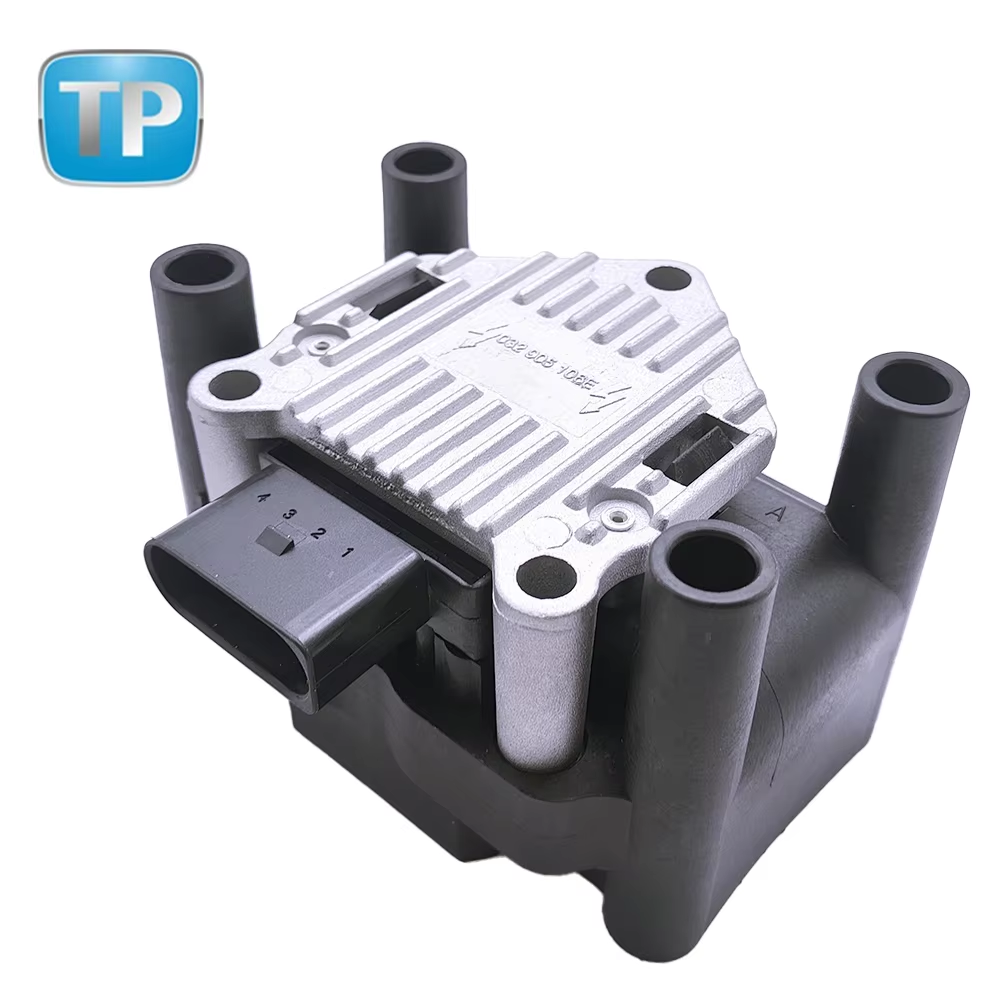
How Ignition Coils Work: The Science Behind Consistent Spark Delivery
Voltage transformation: From 12V battery input to 20,000–50,000V spark output
The ignition coil acts basically like a small transformer with a very high ratio. It takes the car's standard 12 volt battery power and boosts it up to somewhere between 20 thousand and 50 thousand volts needed for the spark plug to work properly. Inside there are these two coils wound together magnetically. The primary one has fewer but thicker wires while the secondary has thousands of much thinner ones. When electricity runs through the primary coil, it creates a magnetic field around either iron or ferrite material. The engine control unit tells when exactly to cut off the primary circuit, which makes that magnetic field disappear quickly. As this happens, it creates a big voltage spike in the secondary coil that sends energy to the spark plug. If we didn't have this massive voltage increase, the spark wouldn't be strong enough to ignite the fuel mixture inside the engine cylinders. This becomes even more important in today's cars where direct injection systems compress fuel at pressures sometimes over 200 pounds per square inch.
Critical timing parameters: Dwell time, saturation, and magnetic collapse rate
Getting reliable sparks from an ignition system really depends on getting three timing parameters just right. Let's start with dwell time first. This is basically how long the primary circuit stays powered up before cutting off. The dwell affects how strong the magnetic field gets in the coil core. If there isn't enough dwell time, the coil doesn't store enough energy, which means weak sparks when the engine revs high. But go too long and things get hot fast, wearing out insulation materials over time. Most mechanics will tell you good results come from around 6 to 10 milliseconds of dwell time, giving enough power without overheating components. Then there's what happens when the magnetic field collapses, something controlled by how quickly the switch cuts power. Faster collapse creates bigger voltage spikes, helping start sparks even at different engine speeds. According to SAE tests, coils that can collapse in under 100 microseconds cut down on misfires by about 42% at 6,000 RPM compared to older models. These days, modern engine control units constantly tweak both these timing factors based on what they sense happening inside the engine bay. They look at things like revolutions per minute, engine load, coolant temps, and whether they detect knocking sounds. All this helps maintain proper combustion no matter what driving conditions throw at the vehicle.
Key Reliability Drivers in Modern Ignition Coils
Thermal resilience: Copper windings, epoxy potting, and heat dissipation design
The number one reason ignition coils fail? Heat. Temperatures inside engine compartments often get way above 120 degrees Celsius, sometimes reaching nearly 250 Fahrenheit. Premium quality coils combat this problem using several clever approaches. They use copper windings that are about 40% better at conducting heat away compared to cheaper aluminum options, which helps reduce resistance based heating issues. Another key feature is the special epoxy sealant that keeps everything inside protected from moisture, vibrations, and repeated temperature changes. Manufacturers also design the outer casings with things like finned housings and special thermal materials to help move heat out more effectively. All these combined stop those dangerous hot spots from forming and protect the insulation layer, which is actually responsible for around 62% of coil failures in engines that have been driven many miles, as reported by Automotive Engineering International last year.
Electrical stability: Output variance under load (SAE J2009 data: ±3% vs. ±12%)
A good ignition coil needs to keep delivering steady voltage even when loads change suddenly. According to standards set by the Society of Automotive Engineers (J2009), high quality coils stay pretty consistent with their output, varying only about plus or minus 3% during hard acceleration or when pulling heavy loads. Cheaper models tend to swing much more wildly, sometimes bouncing around as much as 12%. What makes these better coils so stable? Well, it comes down to how they're built inside. Manufacturers spend extra time getting those magnetic circuits just right, controlling those tiny air gaps precisely, and using materials for the core that are really uniform throughout. This matters most on cold mornings when engines need over 35 kilovolts to start properly. If the coil isn't stable enough during these moments, engines misfire more often and put out way more pollution too. Some research published recently by SAE shows emissions can jump by nearly a quarter in these situations.
| Performance Factor | Premium Coil Range | Economy Coil Range | Impact |
|---|---|---|---|
| Output Variance | ±3% | ±12% | Misfire likelihood under load |
| Temperature Tolerance | -40°C to 180°C | -20°C to 150°C | Cold start reliability and thermal endurance |
| Voltage Consistency | 98% sustained | 85–92% sustained | Reduced spark plug electrode erosion and longer service life |
OEM vs. Aftermarket Ignition Coils: Real-World Reliability Evidence
Toyota Camry Case Study: Bosch vs. Denso COP Survival Rates at 100,000 Miles
A longitudinal field study tracking 200 Toyota Camrys (model years 2015–2018) revealed meaningful differences in coil-on-plug (COP) longevity between OEM and aftermarket units after 100,000 miles of mixed urban/highway driving:
- OEM Denso coils achieved a 92% survival rate, with measured output variance remaining within ±4%—indicating minimal performance degradation.
- Aftermarket Bosch equivalents, while functionally compatible, showed a 78% survival rate; 22% failed due to secondary winding collapse or epoxy delamination under thermal cycling.
What we see here is really about those manufacturer specific production specs. Take a look at their special epoxy mixes that can handle sudden temperature changes better, plus copper that's purer at 99.97% compared to around 99.89% in most after market parts. These small differences actually make a big difference when it comes to preventing tiny cracks from forming after all those heating and cooling cycles. Mechanics out in the field have noticed something interesting too. When after market components fail, they tend to throw those annoying P0300 random misfire error codes much more often than genuine OEM parts do. And when OEM stuff does break down, it usually affects just one cylinder rather than causing widespread problems across the engine. This pattern really highlights why there's such a noticeable difference in durability when vehicles reach those high mileage marks over time.
Top-Rated Ignition Coil Brands for Long-Term Engine Reliability
Delphi ignition coil: Dual-stage winding for turbocharged engine misfire resistance
The dual stage winding design from Delphi really helps boost magnetic field strength when things get intense, which matters a lot in turbocharged engines where cylinder pressures can spike past 2500 psi. When they split the secondary winding into carefully adjusted sections, it keeps the spark energy steady even when someone slams the accelerator hard, cutting down on those annoying engine misfires that happen in boosted setups. These coils are built inside special heat conducting epoxy and can handle constant work at temperatures over 120 degrees Celsius. What's impressive is how they keep their voltage output stable within about 3 percent variation, even when pushed hard for extended periods without breaking down.
Bluestreak ignition coil: Ferrite core performance in high-heat under-hood conditions
Bluestreak uses a special low hysteresis ferrite core design that cuts down on internal heat buildup inside those really hot engine compartments. This is particularly important for cars with transverse engines where the exhaust manifold ends up right next to the ignition system components. When we look at regular silicon steel cores versus these new ferrite materials, tests show about a 25% reduction in hysteresis losses according to research published last year in Materials Science Review. What does this mean practically? The coil can maintain stable voltage outputs above 45,000 volts even when running at 6,000 RPMs. For mechanics working on performance vehicles that spend long hours in extreme temperatures, this kind of thermal management makes a real difference in how long parts actually last before needing replacement.
FAQ
What is the purpose of an ignition coil in a vehicle?
The purpose of an ignition coil is to transform the vehicle's 12-volt battery power into the high voltage needed to create a spark in the spark plugs, igniting the engine's fuel mixture.
How does an ignition coil enhance engine performance?
Ignition coils enhance engine performance by ensuring a steady and strong spark delivery to the spark plugs, which is crucial for efficient fuel combustion and engine reliability.
What are the key factors that affect the reliability of ignition coils?
Key factors affecting ignition coil reliability include thermal resilience, electrical stability, and proper timing parameters such as dwell time and magnetic collapse rate.
What are the main differences between OEM and aftermarket ignition coils?
OEM ignition coils typically have higher survival rates and consistent performance over time compared to aftermarket coils, which can experience issues like secondary winding collapse and epoxy delamination under thermal cycling.