
 EN
EN
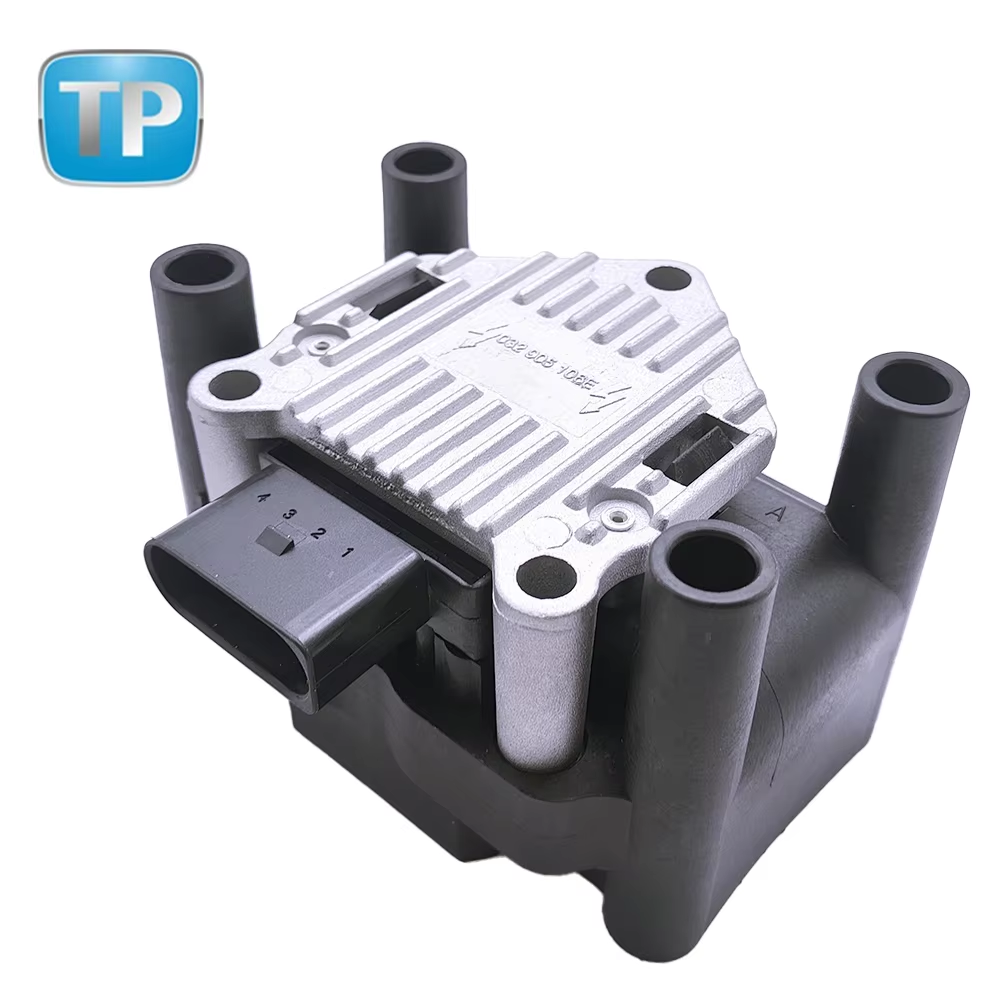
How Ignition Coils Work and Integrate with Engine Management Systems
The Role of Electromagnetic Induction in Generating Spark Voltage
The ignition coil works through electromagnetic induction, taking that humble 12 volts from the car battery and boosting it way up to between 20,000 and 45,000 volts needed for sparking action. What happens here is pretty interesting: when the engine control unit cuts off current flowing through the primary winding, the magnetic field that was built up starts to collapse rapidly. This sudden collapse creates that high voltage spike we need in the secondary winding. The whole thing takes place incredibly fast, just 0.1 to 0.3 milliseconds across every cylinder at once. For this system to work properly, those windings need to have very specific resistance levels. Usually around half an ohm or less in the primary part of the circuit, while the secondary side needs much higher resistance, typically above 10 thousand ohms. These numbers matter because they determine how efficiently energy gets transferred throughout the system.
Integration with ECU: Timing, Trigger Signals, and System Synchronization
The engine control unit or ECU manages when the spark plugs fire by getting information from several sources including where the crankshaft is positioned, what the knock sensors detect, and how much air is flowing into the engine. When it comes to dwell time adjustments, newer electronic systems actually cut down those annoying misfires at lower RPMs by about 30 something percent over the old fashioned mechanical setups we used back in the day. These days most cars have these fancy 32 bit computer chips inside them that figure out exactly when to send the spark through the wires, usually within half a degree either way. And they keep changing this timing constantly depending on things like what kind of gas someone put in their tank or if they're driving high up in the mountains versus sea level, all just so everything burns as efficiently as possible.
Case Study: Voltage Output Comparison — Standard vs. High-Performance Ignition Coils
Under high compression (15:1), performance differences become evident:
| Metric | OEM Coil | Performance Coil |
|---|---|---|
| Voltage at 6000 RPM | 28 kV | 34 kV |
| Thermal Recovery Time | 8.2 sec | 5.1 sec |
High-performance coils deliver 22% higher spark energy during sustained load, enhancing combustion stability and throttle response in modified or high-output engines.
Trend: Miniaturized Coil-on-Plug Designs and Direct Ignition Integration
Coil-on-plug (COP) systems eliminate spark plug wires, reducing secondary resistance by 39% and improving signal integrity. Mounted directly on each cylinder, these coils benefit from better heat dissipation and enable faster thermal cycling—critical for stop-start technologies. Over 78% of 2024 model-year vehicles now use COP configurations as standard.
Types of Ignition Coils and Compatibility with Vehicle Ignition Architectures
Evolution from Distributor-Based to DIS and Coil-on-Plug (COP) Systems
The old days of ignition systems with distributors routing sparks through those central caps and wires are pretty much gone now. Most vehicles today use either Distributorless Ignition Systems (DIS) or the newer Coil-on-Plug (COP) technology. With DIS, we typically see one coil serving two cylinders at once when triggered by the engine control unit. The COP system takes this further by giving each spark plug its own individual coil right on top of it. Getting rid of all those high voltage cables actually makes a big difference. Less resistance means fewer misfires overall. Some research indicates COP systems can reduce misfires by around 40% compared to older distributor models, plus they handle heat better too, which matters a lot under the hood during long drives.
Inductive vs. Capacitive Discharge Systems: Performance and Application Differences
Two main ignition types exist:
- Inductive systems gradually build energy in the coil’s magnetic field, making them durable and well-suited for everyday driving. They dominate OEM applications, with 78% lasting beyond 100,000 miles under normal conditions.
- Capacitive systems store energy in capacitors and release it instantly, delivering faster rise times and tighter timing control—ideal for racing and forced-induction engines, where they provide 15–20% higher voltage output.
Strategy: Matching Ignition Coil Type to Vehicle Make, Model, and Year
Selecting the correct coil requires alignment with three key factors:
- Ignition architecture: DIS coils are incompatible with COP-designed engines and vice versa.
- ECU communication protocols: Late-model vehicles, such as newer Fords, require CAN bus-compatible coils to avoid sensor errors.
- Thermal resilience: Turbocharged and high-load applications demand coils rated for sustained temperatures above 250°F.
Mismatched aftermarket parts cause 23% of premature coil failures. Using a DIS coil in a COP setup can reduce spark energy by up to 30%. Proper selection aligned with OEM specs can improve combustion efficiency by up to 12%, yielding measurable gains in fuel economy during EPA testing.
Critical Performance Factors: Resistance, Voltage Output, and Thermal Management
Primary and Secondary Resistance: Impact on Efficiency and Spark Energy
Getting good performance out of ignition systems really comes down to getting the winding resistance right. Most primary circuits work best when they're in the range of around half an ohm to 1.5 ohms so they can fully saturate without running too hot. For secondary windings, anything under 10k ohms helps cut down on leakage losses and boosts spark strength. According to some tests run by automotive engineers, coils with about 7k ohms secondary resistance actually produce roughly 18% more spark energy compared to those at 15k ohms, especially important for turbocharged engines. When resistance is off spec though, it throws the whole ECU system off balance. This often leads to annoying fault codes popping up on dashboards and can knock fuel efficiency down by as much as 5% because the engine just doesn't burn fuel properly anymore.
Voltage Output Across RPM and Load: Ensuring Reliable Ignition Under All Conditions
Modern coils must maintain 30–45 kV across the entire operating range, especially under high cylinder pressure. During restarts in stop-start systems, voltage demand spikes by 2.3x compared to normal cycles. Performance coils featuring dual-layer epoxy encapsulation maintain 94% voltage consistency under peak load, significantly outperforming budget alternatives at 78%.
Heat Dissipation and Duty Cycle Limits in High-Performance and Stop-Start Applications
Getting thermal management right matters a lot, especially when dealing with hybrid vehicles and turbocharged engines that run longer periods between stops. The premium quality coils come with special housings made from nylon mixed with ceramics, which lets them release heat at about triple the rate of regular ABS plastic parts. When engines go through multiple cold starts, integrated aluminum heat sinks can cut down those maximum working temps by around 27 degrees Celsius. For COP systems facing extreme conditions inside hot engine compartments (sometimes over 150 degrees Celsius), there are temperature monitoring circuits borrowed from power electronics technology. These circuits act as early warning systems, stopping insulation failures before they happen in those tough environments.
Dwell Time, Engine Speed, and Electrical Cycle Optimization
How Dwell Time Influences Coil Saturation and Spark Consistency
The amount of time electricity stays in the primary winding, known as dwell time, really matters for how well coils work and how strong the spark is. When there's not enough dwell time (less than 2 milliseconds), the sparks get weak and engines start missing fire. But if it goes on too long, things get dangerously hot inside. Modern cars have smart systems where the computer controls this dwell time based on what's happening with the battery power and how fast the engine is running. This helps everything run smoother. Real world tests show that getting this timing right makes sparks more consistent about 15 percent of the time, which is pretty good. Plus, coils stay cooler by around 22 degrees Celsius when managed properly. That means better reliability over time for vehicle owners.
Balancing Spark Energy and Coil Temperature in Racing vs. Daily-Driven Engines
Racing engines prioritize thermal stability over maximum spark energy, using shorter dwell times (1.2–1.8ms) to prevent overheating at high RPM. In contrast, daily drivers use longer dwell (2.5–3ms) to enhance low-end torque and cold-start reliability.
| Application | Dwell Time | Max Spark Voltage | Coil Temp Threshold |
|---|---|---|---|
| Racing | 1.5ms | 45kV | 120°C |
| Daily Driving | 2.8ms | 35kV | 95°C |
Newer coil-per-cylinder designs incorporate temperature feedback to dynamically adjust dwell, ensuring peak performance across operating conditions.
Industry Challenge: Avoiding Coil Overload While Maximizing Ignition Performance
The stop start system puts ignition parts through about three times as many firing cycles compared to regular engines, which creates a lot more heat stress on everything involved. That's why car makers have started incorporating dual stage windings lately. These work by having low resistance when the engine needs to charge quickly after restarting, then switch to higher resistance once it's running smoothly. When paired with special insulation materials that can handle upwards of 50 thousand volts without breaking down, this setup actually solves one of the biggest headaches facing automotive engineers today. Getting both long lasting components and powerful output from the same system has always been tricky business, but recent advancements seem to be making real progress toward that goal.
Vehicle-Specific Fitment and the Impact on Fuel Efficiency and Engine Performance
OEM Specifications vs. Aftermarket Upgrades: When to Follow Manufacturer Guidelines
Getting good engine performance really hinges on how well the ignition system works with the way fuel burns inside the engine. When parts don't match what the manufacturer designed, things go wrong fast. The engine might not burn all the fuel properly, which means wasting gas. Some research indicates that getting the specs wrong can actually make fuel consumption jump anywhere between 5% and even 12%. For regular cars straight off the lot, sticking with replacement coils that have similar specs to what came originally makes sense. Look for primary resistance around 0.3 to 1 ohm and secondary resistance somewhere between 6,000 and 10,000 ohms. Now if someone has done serious modifications to their engine, like increasing airflow, boosting compression ratios, or adding forced induction systems, then maybe going beyond standard specs could work better. But always check first before making changes.
Improving Combustion Efficiency and Fuel Economy with Optimized Ignition Coils
Getting accurate spark delivery means the air fuel mix gets properly ignited throughout different engine conditions. When this happens, engine control units can actually use those lean burn techniques without worrying so much about problems. And let's face it, nobody wants their car misfiring all over the place because that just wastes gas. High quality ignition coils made with special epoxy coatings don't lose their effectiveness when exposed to苅菌温度 for long periods. These better coils keep performing reliably even in tough situations such as turbocharged engines or vehicles with start stop technology where temperatures fluctuate constantly.
Data Insight: Real-World MPG Gains from Proper Ignition Coil Replacement
Looking at data from around 1,200 fleet vehicles in 2024 shows that swapping out worn spark plugs for ones that match OEM specs can boost fuel efficiency between roughly 2.1 to almost 5%. The biggest improvements were seen in those older engines with over 75k miles on them, where parts had started to fail intermittently causing misfires. Industry tests also found something interesting about temperature control. Coils that stayed under 185 degrees Fahrenheit lasted about 43% longer than their hotter counterparts. This makes sense when thinking about maintenance costs over time since keeping things cool apparently extends component life significantly.
FAQ
1. How does an ignition coil work?
An ignition coil uses electromagnetic induction to transform a car battery's low voltage into the high voltage needed to ignite the engine's spark plugs.
2. What is the role of the ECU in an ignition system?
The Engine Control Unit (ECU) manages the timing of the spark plugs by analyzing various engine parameters, ensuring efficient combustion.
3. How do high-performance ignition coils differ from standard ones?
High-performance ignition coils offer higher spark energy and better thermal recovery, enhancing combustion stability, particularly in modified or high-output engines.
4. What are Coil-on-Plug systems?
Coil-on-Plug systems eliminate spark plug wires, mounting each coil directly onto its cylinder for better heat dissipation and reduced resistance.
5. What factors should be considered when replacing ignition coils?
Consider the vehicle's ignition architecture, ECU communication protocols, and thermal resilience when selecting new ignition coils.
6. How does dwell time affect ignition coil performance?
Dwell time, the duration electricity stays in the coil, influences coil saturation and spark consistency, impacting engine performance and coil longevity.
Table of Contents
- How Ignition Coils Work and Integrate with Engine Management Systems
- Types of Ignition Coils and Compatibility with Vehicle Ignition Architectures
- Critical Performance Factors: Resistance, Voltage Output, and Thermal Management
- Dwell Time, Engine Speed, and Electrical Cycle Optimization
- Vehicle-Specific Fitment and the Impact on Fuel Efficiency and Engine Performance
-
FAQ
- 1. How does an ignition coil work?
- 2. What is the role of the ECU in an ignition system?
- 3. How do high-performance ignition coils differ from standard ones?
- 4. What are Coil-on-Plug systems?
- 5. What factors should be considered when replacing ignition coils?
- 6. How does dwell time affect ignition coil performance?